
Reading Order
Chronicles of the Black Company
by Glen Cook
Chronicles of the Black Company Reading Order
by Glen Cook
One of the founding texts of grimdark fantasy — written years before the term existed. The Black Company is a mercenary band that has served under a succession of employers for centuries, keeping its Annals as it goes. The books are narrated by the Company's physician and historian, Croaker, in a clipped, unsentimental military voice unlike anything else in the genre. No chosen ones. No prophecy. Just soldiers doing terrible things in service of worse masters, and somehow finding loyalty worth dying for.
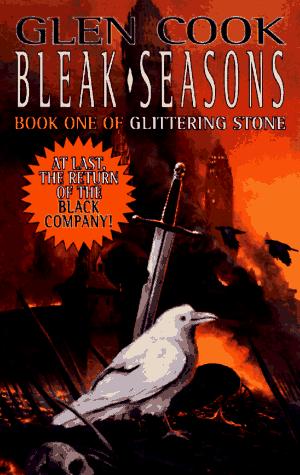
⚠️ Bleak Seasons (book 6) opens with a deliberately fractured, non-linear narrative. This is Cook's intentional choice — push through. The timeline becomes clear and the payoff is worth the initial confusion.
Reading Order
Read The Chronicles first (books 1–3) — they stand alone and are the best entry point. Port of Shadows is an optional interquel between books 1 and 2. The Books of the South and Glittering Stone follow directly. The Silver Spike sits before Shadow Games in chronological order.
📖 The Books of the North (3)
The original trilogy. Self-contained, essential. The best entry point and some of the best military fantasy ever written.
⚔️ Books of the South (2)
The Company moves south. Shadow Games and Dreams of Steel shift the series' tone toward myth and strange magic. Read after the trilogy.
🏁 Glittering Stone (4)
The final arc. Four books across a decade of publication. Soldiers Live closes the Annals.
📘 Optional (2)
The Silver Spike (parallel story from the north) and Port of Shadows (interquel). Both reward series fans but are not essential to the main arc.
Why it matters
- → Published in 1984 — The Black Company predates A Song of Ice and Fire, The First Law, and every modern grimdark series. It invented the template.
- → George R.R. Martin, Joe Abercrombie, and Steven Erikson have all cited it as a direct influence. Malazan Book of the Fallen would not exist without it.
- → Cook's prose is deliberately unadorned — clipped, military, journalistic. The Annals are written by a soldier, not a storyteller. This is a feature, not a bug.
- → The moral ambiguity is structural. The Company serves evil employers. The characters know this and keep serving. The books are about what loyalty costs.
- → Women in the series — Lady, Soulcatcher, the White Rose — are among the most genuinely powerful and dangerous characters in fantasy.
The Annals voice
Every book is narrated by the Company's Annalist — their physician-historian, responsible for keeping the official record. The voice is Croaker's for most of the series: dry, self-deprecating, occasionally sardonic. He records what he sees and admits what he doesn't know. This unreliable, limited perspective is central to the series' appeal — you piece together the larger picture from the ground level, just like the soldiers do.
Reading Bleak Seasons
Bleak Seasons opens with Murgen narrating from fractured, non-linear memory — he is haunted and displaced in time. Many readers bounce off this. Stick with it: the disorientation is deliberate and the timeline resolves. If you've made it through the first five books, Cook has earned your trust here.
Darkness progression
Scale: 🕯️ Lighthearted → 🕯️🕯️🕯️🕯️🕯️ Brutal
Finished the Annals?
More reading orders