

Laozi's Dao De Jing
Synopsis
A fresh, graceful translation of one of the most important and timeless classics—the foundational work of Daoism—by award-winning novelist Ken Liu, who contextualizes and demystifies this famously enigmatic text. Laozi’s Dao De Jing was written around 400 BC by a compassionate soul in a world torn by hatred and ambition, dominated by those that yea… A fresh, graceful translation of one of the most important and timeless classics—the foundational work of Daoism—by award-winning novelist Ken Liu, who contextualizes and demystifies this famously enigmatic text. Laozi’s Dao De Jing was written around 400 BC by a compassionate soul in a world torn by hatred and ambition, dominated by those that yearned for apocalyptic confrontations and prized ideology over experience. By speaking out against the cleverness of elites and the arrogance of the learned, Laozi upheld the wisdom of the concrete, the humble, the quotidian, the everyday individual dismissed by the great powers of the world. Earthy, playful, and defiant, Laozi’s words gave solace to souls back then, and offer comfort today. Now, this beautifully designed new edition serves as both an accessible new translation of an ancient Chinese classic and a fascinating account of renowned novelist Ken Liu’s transformative experience while wrestling with the classic text. Throughout this translation, Liu takes us through his own struggles to capture the meaning in Laozi’s text in a series of thoughtful and provocative interstitial entries. Unlike traditional notes that purport to be objective, these entries are explicitly personal and unapologetically subjective. Gradually, as Liu learns that true wisdom cannot be pinned down in words, the notes grow sparser until they fade away entirely. His journey suggests the only way out of struggle is to engage with texts that have survived the millennia, wrestling with ideas that gesture at something eternal, in hopes that we might eventually reach that moment of transcendent joy. Liu’s translation, by eschewing cleverness, paradoxically reveals the slipperiness of Laozi’s original. The Dao De Jing has been translated countless times and will be translated countless times in the future. In that constant change and flow, we finally find our home in Dao, the eternal principle that allows us, finite beings in time and space, to reck
Tone
Readers Also Enjoyed
Introducing The Witcher
Andrzej Sapkowski
The Return of the King
J.R.R. Tolkien
The Last Olympian
Rick Riordan

The Titan's Curse
Rick Riordan
Muse of Nightmares
Laini Taylor
The Fury of the Gods
John Gwynne
The Realms of the Gods
Tamora Pierce
The Awakening
Ryan Sova

The Kingdom of Copper
S.A. Chakraborty
The Raven King
Maggie Stiefvater
The Song of Achilles
Madeline Miller
Emperor Mage
Tamora Pierce
The Winter of the Witch
Katherine Arden
The Hunger of the Gods
John Gwynne
The Chronicles of Narnia Pop-up
C. S. Lewis
Age of Legend
Michael J. Sullivan
Blue Lily, Lily Blue
Maggie Stiefvater
Intensity
Sherrilyn Kenyon
How the King of Elfhame Learned to Hate Stories
Holly Black
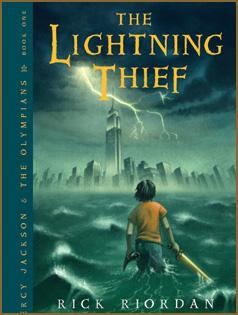
The Lightning Thief
Rick Riordan